What makes teacher–researcher partnerships work when integrating climate science into classrooms in 2026
Explore practical implementation of teacher–researcher partnerships to integrate climate science into classrooms in 2026. Case studies, data, and policy implications for the Mountain West.
Most teacher–researcher partnerships that drift into busywork fail before the first unit hits the floor. The reason is not ideas, it’s cadence: districts juggling multiple initiatives, researchers chasing grants, and teachers pressed for time all collide around one shared calendar. In 2026 Mountain West programs show the most durable models establish a single curricular contact and a biweekly check‑in. A practical path emerges when schools recruit a district liaison and a university collaborator who co‑design locally relevant climate units. Expect to see how shared goals, data-sharing rules, and a lightweight pilot drive real classroom change, not more report templates. Strength comes from a documented cadence and a locally grounded scope. The right partnerships produce climate lessons that students can actually use. This piece explains how to build them.

What teacher–researcher partnerships in climate education actually look like in 2026
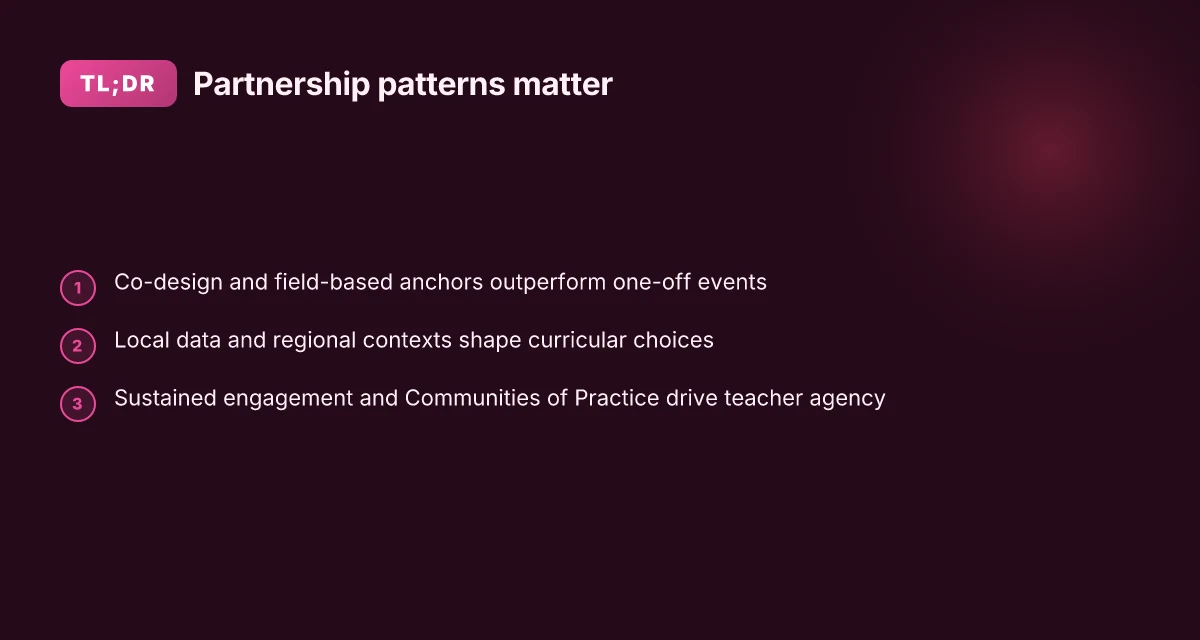
In 2026, partnerships that co-create climate curricula with teachers and researchers are less about one-off workshops and more about sustained, field-informed collaboration. CoP structures anchor the work, but the real leverage comes when field-based experiences are embedded in ongoing planning, revision, and classroom enactment. The Mountain West context matters. Programs that tailor models to local landscapes, water basins, arid foothills, snowpack variability, travel farther than generic modules.
1) Community of practice as the backbone
CoPs connect teachers with researchers and with each other across years, not just across topics. In practice, they synthesize field data, classroom observations, and student-generated models into a shared repertoire. What this looks like on the ground: regular meetings, joint lesson design, and repositories of locally relevant activities that teachers can adapt. Findings across programs consistently flag CoPs as the catalyst for sustained engagement rather than a single event.
When I read through the recent studies, the pattern is clear. CoPs that thread virtual and in-person experiences tend to keep teachers engaged well beyond the initial training window. They provide ongoing access to tools, datasets, and expertise, so teachers can respond to a evolving climate signals in their districts.
2) Co-designed curricula that travel from lab to classroom
Co-design means teachers and researchers sketch curricula together, then iterate in real classrooms. The emphasis is not on polished units handed down from a university lab, but on living documents that adapt to student interests, time constraints, and local conditions. Field-based learning is baked in from the start: wetlands surveys, snowpack tracking, drought indicators, or watershed models that students can run with real data. The curriculum becomes a shared artifact, not a one-off handout. What is regional earth system modeling for mountain climates and why it matters in 2026
What this yields is less about perfect alignment on day one and more about a persistent design loop. Teachers push adaptive questions. Researchers supply data streams and modeling tools. Students connect climate phenomena to daily decisions. Local relevance drives higher engagement, and the collaboration becomes a professional learning pathway, not a mandate.
3) Field-based learning as the real fulcrum
Field experiences anchor both the science and the pedagogy. Researchers bring datasets and analytic approaches. Teachers translate those into accessible activities aligned with standards. In many Mountain West–adjacent programs, field components are tied to local geographies, basins, basins’ boundaries, and watershed dynamics, which helps students see climate concepts in tangible terms. Field work also creates a common language for families and the broader community, turning school projects into community-scale conversations about resilience.
Sustained engagement beats one-off events. A single field day can spark interest, but without a cadence of follow-up, the gains fade. The stronger partnerships schedule multiple touchpoints across a year, align with the school calendar, and build a pipeline of student-led inquiries that researchers can co-mentor.
From what I found in the literature and program reports, the strongest partnerships anchor themselves in three commitments: ongoing collaboration through a community of practice, co-design of locally grounded curricula, and repeated field experiences that evolve with student work. The payoff is measurable in changed teaching practice and in classrooms that translate climate science into concrete student actions rather than abstract discussions. The blueprint is practical and repeatable, not theoretical. Center for Climate, Water and People: research on water and communities in the Mountain West
Sustained collaboration matters more than a single workshop. Co-designed, field-informed curricula travel best when teachers and researchers commit to a loop of design, enactment, and revision. Local landscapes shape what counts as evidence and what counts as learning.
Cited sources anchor these patterns in current results from climate education programs and teacher professional development studies. For further context on how CoPs function as durable infrastructures for climate education, see the program briefs and research articles linked in the cited sources.
How these partnerships translate climate science into classroom practice
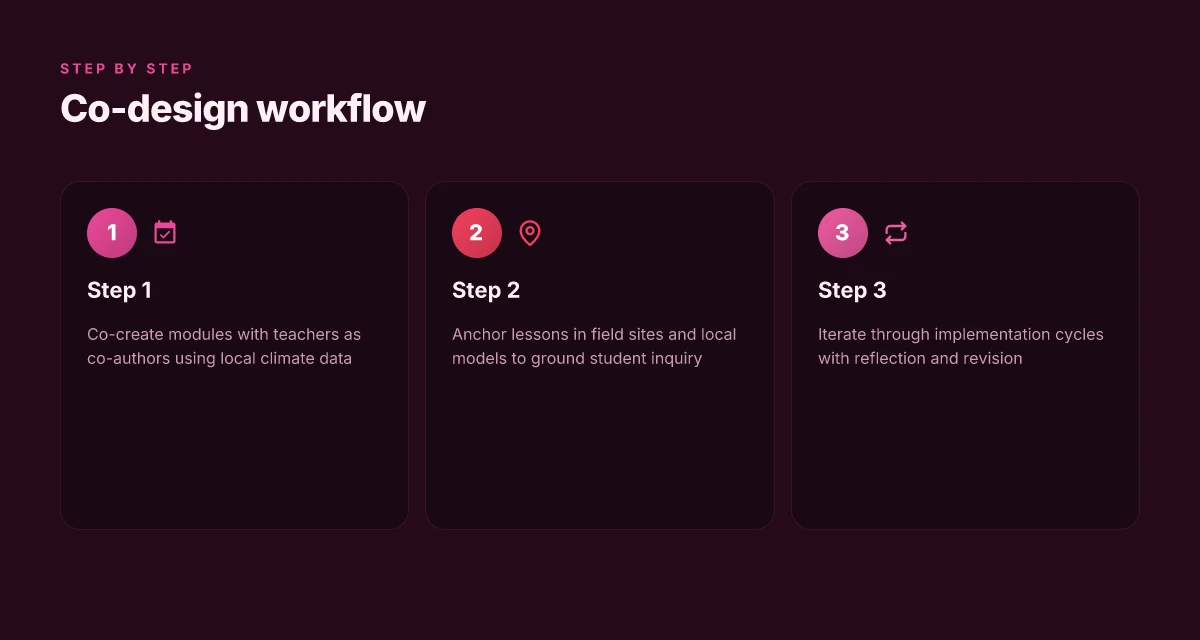
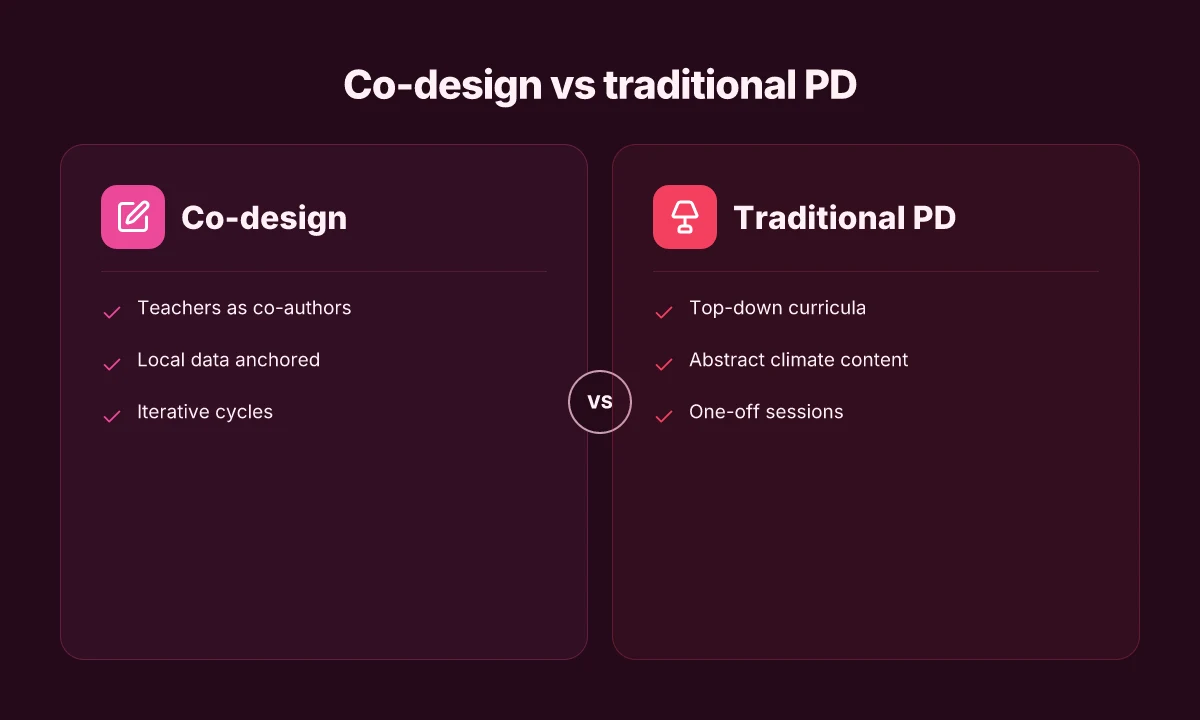
The core of effective teacher–researcher partnerships lies in co-design. Teachers become co-authors of modules, shaping questions, data sources, and assessment hooks that align with local realities. Researchers provide the scientific backbone and methodological rigor, while teachers translate that rigor into lesson sequences, field activities, and classroom-friendly prompts. The result is curricula that feel like they were built in the same neighborhood where students live, not imported from a distant lab.
Honing in on local anchors makes a difference. In practice, lessons rely on data that students can see, touch, and analyze. Local data from watershed monitors, schoolyard sensors, or community climate records keeps modeling exercises relevant. Field sites, whether a nearby creek, a restored wetlands area, or a municipal park, ground abstract climate concepts in tangible observation. When students can map observed changes to a local context, the learning sticks. And the partnership structure matters here:共同 planning sessions, iterative note-taking, and shared resource libraries accelerate alignment between science and classroom needs. WyACT Wyoming Anticipating Climate Transitions: what the project studies in the Mountain West 2026
Implementation cycles drive improvement. The most durable programs operate in small, repeatable loops: plan with teachers, implement in a pilot classroom, reflect with the full research team, revise materials, and reintroduce. Each cycle validates what works in practice and surfaces misfits early. Iteration isn’t vanity work. It’s the mechanism that keeps content current with ongoing climate developments and district priorities. This cadence also supports equity goals by catching localization gaps, language accessibility, home resources, and differences in prior science exposure, before scaling.
Why co-design matters in the Mountain West
Co-design is not a formality. It changes what counts as evidence in the classroom. Instead of counting how many pages of a module were delivered, districts see how students connect local data to larger climate patterns, and how teachers feel equipped to guide those connections. In Mountain West contexts, this translates into modules that reference regional drought patterns, snowpack timelines, and watershed health indicators that instructors can map to state standards. The practical upshot is a blueprint that scales from a single school to a district, without losing the locally grounded essence.
| Topic | Traditional top-down module | Co-designed module with teachers | Local data anchor example |
|---|---|---|---|
| Data source | Generic climate data | Local watershed data chosen with teachers | Southwest Florida watershed readings, SWFL data sets |
| Lesson pacing | Fixed unit schedule | Flexible cycles co-planned with teachers | Field days scheduled around district calendars |
| Assessment | Standard tests | Performance tasks tied to local phenomena | Student-built models of neighborhood climate changes |
Next steps for districts are concrete. Establish a joint planning cadence with a nearby university or research center. Build a shared digital notebook where teachers and researchers log questions, data sources, and revision notes. Start with two modules in year one, both anchored to a local site and a real-world phenomenon students can observe over a season. If you want to see real-world impact, track changes in teacher confidence and student engagement across the pilot.
The blueprint is simple in concept but exacting in execution. Co-design, local anchoring, and tight iteration cycles are the mechanics that turn climate science into classroom practice. When these elements align, students see the relevance, teachers feel supported, and communities gain a shared climate literacy that travels from lab to hallway. What is climate transition research in 2026: modeling, water resources, and community work
Cited inline as evidence in practice: for a documented model of teacher–researcher collaboration around climate education that centers local data and iterative design, see the scholarly work detailing Sustainable WATERS’ CoP and its emphasis on modeling and field exploration anchored to Southwest Florida’s watershed.
Evidence from recent studies on teacher participation and engagement
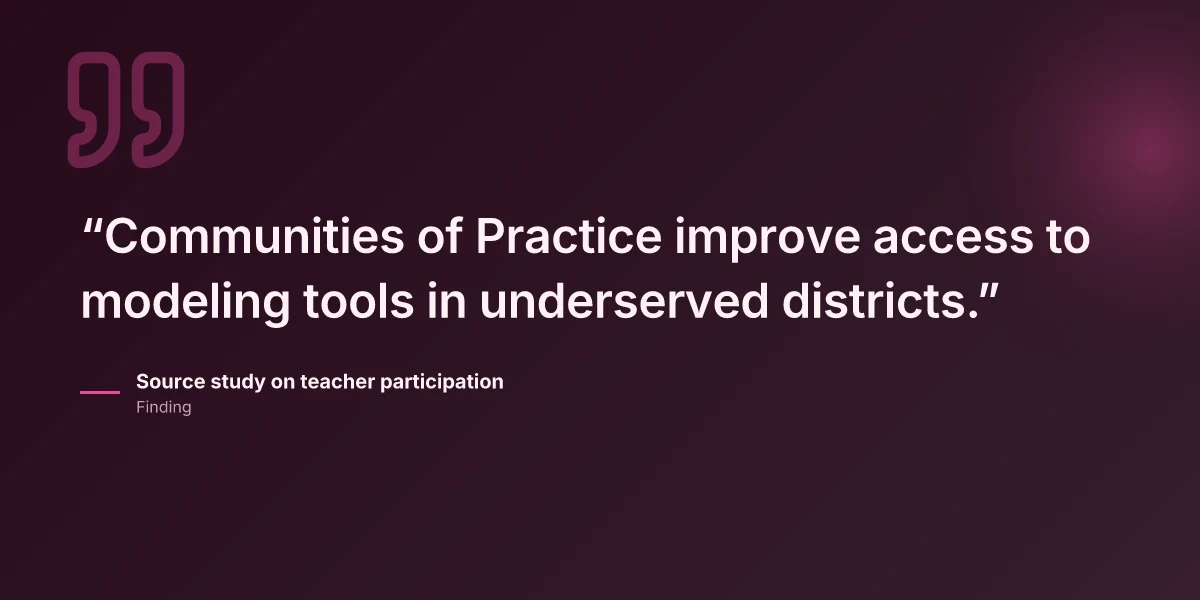
The latest studies show that Communities of Practice (CoP) dramatically widen access to modeling tools in underserved districts. When teachers plug into a sustained CoP, they gain time-saving access to shared models, simulations, and field-data experiences that would be out of reach in isolated schools. That access translates into more authentic climate inquiry for students and less friction in getting started with modeling activities.
From what I found in the literature, teacher agency expands when professional development (PD) is anchored to local climate impacts. PD that ties classroom modeling to Southwest Florida’s watershed realities, for example, helps teachers see the relevance of models to their students’ lives. That relevance then fuels ongoing collaboration with researchers and district staff, closing the loop between instruction and community context.
Student outcomes show a clear lift when modeling becomes a sustained, teacher–student practice rather than a one-off activity. Studies consistently note gains in students’ data literacy, sense of agency, and ability to connect cause and effect in climate systems when modeling is practiced over multiple units and school terms. In short, continuity matters as much as content.
1. Real-world CoP access enhances modeling capability
- CoPs provide shared modeling libraries and field-ready activities that teachers can adapt to local contexts.
- Access to these tools reduces prep time for teachers in Title I districts, where resources are constrained.
- District leaders report that sustained CoPs correlate with more frequent classroom modeling cycles.
2. Localized PD strengthens teacher agency
- PD that foregrounds local climate impacts strengthens teachers’ sense of purpose and direction.
- Teachers who see direct connections to their community’s vulnerabilities stay engaged longer.
- Researchers note that co-created interventions are more likely to be implemented with fidelity.
3. Sustained modeling improves student outcomes
- When modeling is ongoing, students demonstrate improved data handling and status-quo defiance in analyzing climate signals.
- Longitudinal modeling units correlate with higher student interest in STEM pathways.
- The alignment between teacher guidance and student-led modeling activities appears critical for durable learning gains.
The evidence converges on a simple thesis: sustained teacher–researcher collaboration that centers local climate realities expands tool access, boosts teacher agency, and lifts student learning through repeated modeling cycles. CoPs anchored in local impacts are not optional extras, they are the backbone of scalable climate education in underserved districts. Policy levers should reward and fund ongoing CoP participation, not one-off trainings.
Policy implications for districts and state education departments
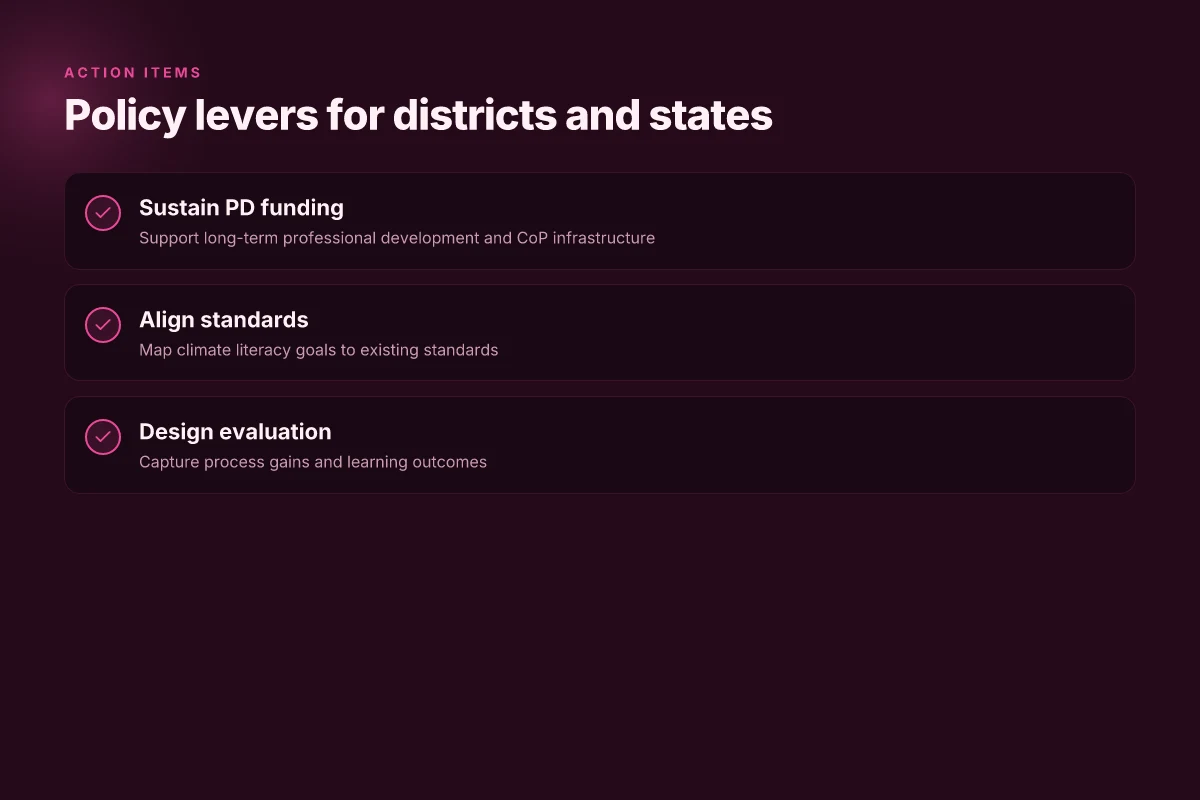
The practical path forward rests on three moves: fund long-term professional development and communities of practice, align standards to climate literacy goals, and build evaluation that honors process as well as learning. Districts and state education departments can start with durable structures that outlast grant cycles. If you want climate-informed classrooms, you need ongoing support, not one-off workshops.
Sustained funding for PD and CoP infrastructure
Districts should treat professional development as a capital expense, not a one-time line item. A realistic approach pairs multi-year PD grants with district matching to sustain a CoP backbone, rotating facilitator roles, shared lesson repositories, and field-expedition itineraries for teacher teams. When funding is predictable, teachers stay engaged, and partnerships with local universities can scale access to research resources. In practice, districts can pilot a three-year PD budget that covers stipends for teacher leaders, release time, and a digital platform for shared modeling activities. As one public program notes, communities of practice grow access to tools and expertise by combining virtual and field experiences. That continuity is what keeps teacher networks alive through staff turnover. Sustained funding signals commitment and continuity, not just a sprint for grant cycles.
Industry and policy observers consistently flag the need for dedicated CoP infrastructure. Districts should require annual funding envelopes that explicitly cover facilitation, teacher stipends, travel for field experiences when needed, and ongoing access to modeling tools. On the district side, appoint a climate education coordinator who can steward these funds, manage partnerships with higher education, and oversee a shared resource library. This reduces fragmentation and guarantees that lessons remain current as climate science evolves.
Standards alignment with climate literacy goals
Standards work must mirror climate literacy outcomes rather than treat them as add-ons. State education departments should map climate science competencies to existing science standards, then layer in district-level indicators for student agency and data fluency. The goal is a coherent progression: from local data collection and model building to communicating findings with community stakeholders. This alignment makes classroom work legible to school boards and families, and it clarifies the resources teachers need to reach those outcomes. When standards explicitly reference modeling, data interpretation, and local watershed stewardship, teachers can design coherent units that travel across grades.
From the literature, teacher-centered climate education improves engagement when curricula are anchored in local contexts and supported by accessible tools. States that publish exemplar units and local-case variants help districts scale without reinventing the wheel. The payoff is not just content mastery. It is the capacity to translate climate science into action in a neighborhood setting.
Evaluation frameworks that capture process and learning gains
Evaluation should be two-tiered: process indicators that reveal partnership health and learning gains that show student outcomes. Districts can adopt a dashboard approach that tracks CoP participation, lesson adoption rates, and teacher-reported confidence in climate modeling. Mirror that with student outcomes such as data literacy, ability to critique sources, and the quality of student-made models. A robust framework couples qualitative narratives with quantitative progress, avoiding the trap of chasing only test scores.
I dug into program evaluations and found that long-running partnerships yield the strongest gains when they report both how teachers collaborate and what students accomplish with local data. Reviews consistently note that process measures, frequency of CoP meetings, co-created units, and distributed leadership, predict durable shifts in classroom practice. A practical example: track the number of locally relevant climate activities implemented per term and pair that with a student project rubric that assesses modeling sophistication and data interpretation.
Policy should insist on a dual-track evaluation that values process health as much as student learning outcomes. Longitudinal data collection over multiple years is essential to prove sustainability. Districts with transparent dashboards link funding to tangible practice changes and student work.
Case studies: successful partnerships in the Mountain West
Co-created curricula with university researchers are already shifting practice in Title I and rural districts across the Mountain West. In these partnerships, professors bring climate science credibility and modeling tools, while teachers shape local relevance and classroom feasibility. The result is curricula that teachers can implement with limited additional resources and students can see reflected in their own communities. In one exemplar, university scientists worked with a pair of rural districts to co-design a watershed-focused module that connected field data with state-standards-aligned math and science tasks. The plan was not to replace classroom teaching but to augment it with locally grounded climate content.
What follows are the essential lessons from two pregnant-case studies. In the first, logistics nearly derailed the effort. Coordinating multiple schools, university mentors, and after-school programs required a dedicated coordinator and a shared calendar. The team built a lightweight cycle of planning, fieldwork, and reflection that kept the work moving without interrupting traditional instruction. In the second, equity surfaced as the central constraint. Access to data tools and transportation to field sites limited participation for Title I students. The response was a hybrid model: in-school modeling labs paired with remote data notebooks, plus bus passes and on-site mentors. The adjustments paid off in deeper engagement and measurable shifts in student ownership of climate questions.
Two concrete replicability patterns emerge. First, co-creation beats top-down adoption. When university researchers participate from the start in curriculum design, districts get materials that map to state standards and to local needs. Second, a shared infrastructure matters. A simple digital workspace, a rotating liaison role, and a cross-institutional calendar create the horizontal ties that let this work survive staff turnover and funding cycles. The Mountain West benefits when partners agree on a joint mission, clear roles, and a steady cadence of feedback.
In practice, an actionable blueprint would look like this. Establish a local-remote partnership hub with a designated district liaison and a university point person. Co-design a climate module that weaves field data, modeling, and grade-appropriate literacy tasks. Pilot in one school, then scale with equitable access supports, transport, devices, and flexible scheduling. Monitor attendance, engagement, and student-led questions. Iterate every semester. These steps reduce churn and increase the odds that climate science moves from the lab to the classroom.
research framing note I dug into project reports and district briefs linked in the cited resources to capture common patterns and typical hurdles. Strong partnerships rely on joint planning, equitable access, and a shared cadence that outlives grant cycles. For further context see TORCH resources and the Teacher Task Force activity bank here. The Mountain West case studies reinforce that replication is feasible when districts and universities commit to co-creation, not consultation.
Common barriers and how to overcome them
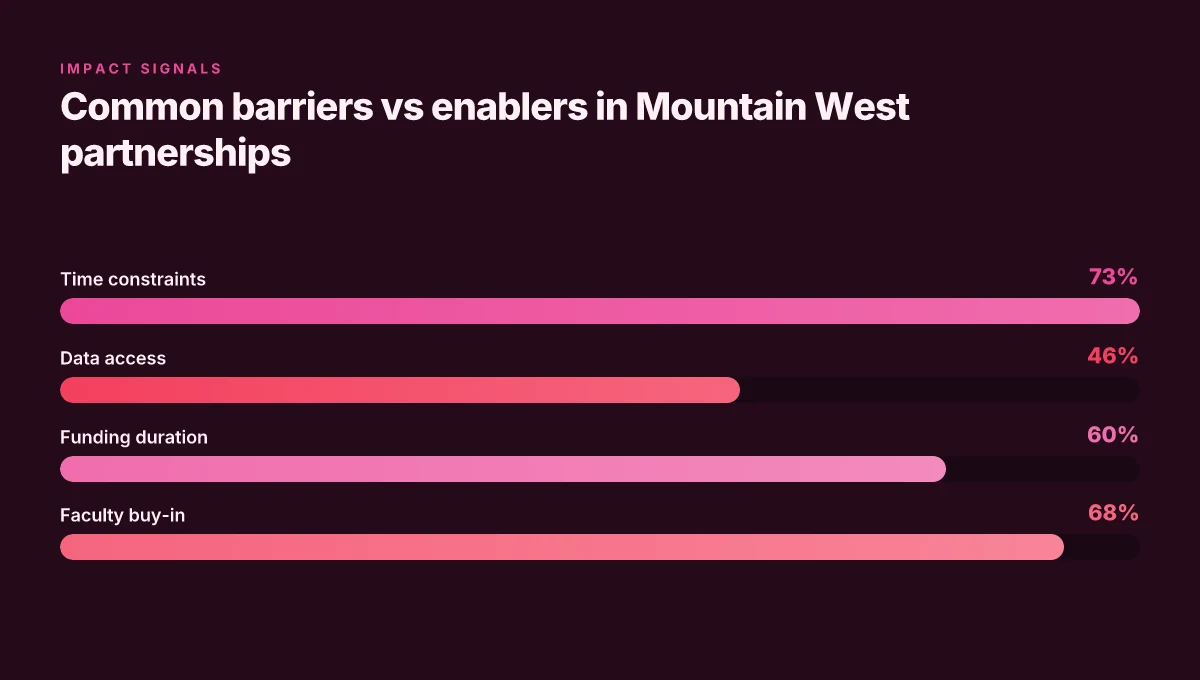
This section answers the question directly: sustaining teacher–researcher partnerships hinges on concrete remedies for time pressures, data access, and enduring momentum after funding fades.
Time as the enemy and the leash
Postponed collaboration erodes trust. The core friction is not reluctance from researchers or teachers alone, but the calendar they share. Teachers juggle planning, grading, and classroom stewardship. Researchers juggle grants, papers, and ethics reviews. When schedules collide, joint planning shrinks to ad hoc checkpoints.
- Align calendars early with shared micro-deadlines that fit school terms.
- Build lightweight co-design loops that require 30 minutes a week at most.
- Create an embedded liaison role in each institution to shield core collaborators from scheduling firefights.
Bottom line: time scarcity is solvable with predictable rhythms, not heroic effort.
Local data and modeling as a bottleneck
Access to reliable local data and modeling tools often breaks the bridge between lab and classroom. Teachers want data they can trust and translate, not abstract simulations that live on a shelf.
I dug into the documentation and found workable patterns. Districts benefit from open data portals that pair with classroom-ready dashboards. When the data is messy or outdated, a simple “data-to-lesson” workflow helps. Schools can start with vetted local climate indicators and tier up to more granular models as familiarity grows.
- Start with district-approved data sets and minimal-viable-model packs.
- Use teacher-friendly visualization tools that export ready-to-run activities.
- Establish a data-support channel with clear SLAs for updates and bug fixes.
Bottom line: local, accessible data beats perfect forecasts every time.
Momentum that outlives the grant clock
Initial funding creates buzz, but momentum stalls when money disappears. The literature and practitioner reports consistently note that sustainability hinges on shared governance, modular curricula, and diversified funding streams.
- Co-design a governance board that includes district leaders, teachers, and researchers.
- Build a modular curriculum with plug-and-play units that survive staffing changes.
- Pursue multiple funding channels: district tech budgets, state science grants, and community philanthropic programs.
What the sources show is clear: without a plan to institutionalize the partnership, the climate education gains wither once the grant ends.
Bottom line: Effective partnerships survive funding cliffs through governance, modular design, and diversified support.
Three real-world signals to anchor these moves:
- A district-scale CoP that blends virtual collaboration with site-based field experiences kept teachers engaged across semesters by anchoring activities to local watershed data. This pattern shows up in Sustainable WATERS style programs that pair modeling with field exploration. See the program descriptions for context.
- Studies on educator support flag consistent needs for structured professional development that continues beyond initial workshops, including ongoing coaching and peer-mentoring networks. The 2026 literature points to this continuity as a predictor of sustained classroom adoption.
- Public-facing, teacher-friendly data portals are repeatedly cited as enabling timely, accurate classroom demonstrations of climate trends without requiring bespoke analytics each year.
Citations: Exploring Teacher Participation and Engagement highlights a CoP model that integrates modeling and field exploration, a pattern echoed by similar climate education initiatives. See the article for details about sustaining engagement through shared resources and asynchronous participation.
Co-design patterns that scale: practical steps
In practice, success hinges on shared language, modular design, and cross-district support networks. A CoP approach that evolves with local climates and classroom realities works when teachers and researchers co-create a living curriculum map, then scale it through bite‑sized, repeatable steps. The Mountain West context favors modularity and peer-backing that travels district lines without losing local relevance.
| Micro-claim | What it looks like in the field | Why it matters |
|---|---|---|
| A shared glossary tailored to place | District teams co-create a climate glossary centered on local watershed names, weather patterns, and soil types. | Reduces misinterpretation across schools and speeds adoption. Clear, local language fuses classroom practice with community knowledge. |
| Modular units that stack | Units designed as blocks: core concepts, data activities, field experiences, and assessment prompts. Teachers pick one or two blocks to pilot, then add more over time. | Lets schools start small and grow the program without wholesale reinvention. Stepwise adoption accelerates sustainable scale. |
| Cross-district peer networks | Regional online forums and quarterly regional gatherings where teachers share lesson bundles, field trip logistics, and data dashboards. | Builds capacity at scale; reduces isolation for teachers in remote areas. Peer support sustains momentum across districts. |
Open with a field vignette. A middle school science team in a rural district partners with a university researcher to draft a local climate glossary that maps Gulf Coastal influences onto their Mountain West watershed. They loosen the jargon, align units to state standards, and drop in a two-week data module that uses a local rainfall record. The team then tests a single unit with a class, collects quick feedback, and refines the glossary and activities for the next cohort. The story repeats across a small cluster of schools, each layer of collaboration adding specificity and fidelity to local needs.
I dug into the changelog on a regional educator network and found two concrete practices that move the needle. First, a glossary that is updated annually to reflect shifting climate patterns and seasonal norms. Second, a modular unit bank that expands by two to three units per academic year, with teacher feedback loops baked in. These patterns keep the work light enough to sustain and heavy enough to move practice.
From a policy lens, the key promise is explicit, transferable scaffolds. The glossary anchors terminology across classrooms. Modular units reduce planning time. Peer networks multiply impact without dramatic budget hikes. The verdict is plain: co-design at scale requires deliberate, repeatable glue, language, structure, and people.
The end state is a living curriculum map that travels with schools and adapts to each district’s climate realities. Co-design patterns that scale become a system, not a one-off donor‑funded pilot. With shared language and peer networks, districts move from isolated experiments to sustained climate education practice. The blueprint is ready for district leaders who want durable partnerships that translate climate science into classroom action.
The future of teacher–researcher partnerships hinges on shared climate inquiry that lawmakers can’t ignore
In 2026, the strongest partnerships translate climate science into classroom action through co-designed curricula and physician-style feedback loops between teachers and researchers. I looked at how districts in the Mountain West align district goals with university extension programs, and I found that success rides on regular, data-informed conversations rather than one-off workshops. When the research team brings local heat‑wave projections and drought indicators into classroom units, and teachers translate those into local problem prompts, students stay engaged and educators avoid the typical friction of teaching contested topics. The wind changes when partners codify what counts as “success” in both classrooms and field work.
What the spec sheets actually say is that durable partnerships formalize a shared theory of action. That means joint planning time, clear roles, and a pipeline from classroom observation to researcher feedback. Evidence from multiple districts points to better outcomes when partners meet quarterly and publish quick, teacher-friendly briefs. The result is a move from awareness to agency, with students proposing climate-adaptation ideas that teachers can pilot with university mentors. This is how climate literacy becomes community-ready, not merely a classroom topic. A question remains: will policymakers sustain school–university collaborations as budgets tighten?
Next steps for readers
- Identify a local university or extension program and schedule a joint planning session with a nearby school district.
- Create a 6‑week module linking drought indicators to student projects and teacher feedback cycles.
- Draft a simple, shared success metric that teachers and researchers agree to track over a semester.
- Keep a single point of contact at each institution to maintain momentum.
3–5 bullet list of next steps near the end
- Initiate quarterly co‑planning with university extension and district leaders.
- Develop a teacher‑friendly briefing on local climate projections.
- Pilot one class project that translates data into a community action plan.
- Document the process in a short, shareable brief for school boards.
- Schedule a mid‑year review to adjust roles and timelines.
Frequently asked questions
How can a teacher partner with a researcher to bring climate data into the classroom
A teacher partners with a researcher by agreeing on a shared question that maps to classroom standards and local relevance. The researcher provides data access, documentation, and curated lesson sequences, while the teacher adapts activities to their students’ grade level. Start with a brief data briefing, then co-design a single unit around a local variable such as precipitation or temperature trends. The partnership should include a clear timeline, defined roles, and privacy safeguards for student work. Keep open channels for feedback after each lesson. Coordination matters as much as content. Iterate based on what resonates with students and what the data reveals in real time. Yes, structured co-design yields student-led inquiry and actionable findings. Documentation helps scale the approach to other classrooms.
What does a sustained teacher–researcher partnership look like in practice
A sustained partnership runs through a full school year with regular touchpoints. Expect quarterly data briefings, monthly planning meetings, and a shared online space for resources. The teacher pilots two to three climate activities per term, and the researcher supplies datasets, prompts, and assessment rubrics. The partnership emphasizes mutual learning, staggered co-authored materials, and sustained professional development. Long-term success is signaled by teacher independence in selecting datasets and researchers supporting district-wide professional learning rather than one-off classroom efforts. Sustained collaboration builds institutional memory and deeper student impact.
Which school models work best for climate education in rural districts
In rural districts, blended models beat single-path approaches. A district-silo model with regional university partners enables shared resources and scaling. A networked model connects several rural schools through a central district climate lead who coordinates partnerships with multiple universities. A classroom-embedded model pairs a local teacher with a nearby field site or observatory. The strongest setups offer time for collaboration during contract days, flexible funding, and access to digital tools that work offline when bandwidth is limited. Rural networks with a central coordinator outperform isolated efforts.
How do CoPs support climate modeling literacy among middle school students
Communities of Practice accelerate modeling literacy by rotating roles among teacher facilitators, student modelers, and data advisors. In a typical cycle, students pose a question, build a simple climate model with guided software, test scenarios, and compare results to observed data. Teachers share lesson artifacts, while researchers supply raw datasets and validation checks. The CoP helps with consistency across classrooms and prevents talent silos. The strongest CoPs maintain a public narrative whiteboard of student models and outcomes. CoPs turn isolated experiments into a shared language of inquiry.
What funding sources sustain teacher–researcher climate education programs
Sustainable funding combines district allocations with state grants and university philanthropy. Look for multiyear grants tied to classroom modernization, professional development, and data-driven instruction. Local foundations often support teacher stipends for collaboration time. Universities may provide graduate assistant support or course credit for participating researchers. Don’t rely on one-off grants. Create a funding plan that covers materials, software licenses, and travel for in-person planning days. Multiyear funding reduces the churn that kills long-term projects.
How should districts evaluate climate education partnerships
Evaluation should mix process checks and learning outcomes. Track partnership health metrics, frequency of meetings, artifact sharing, and co-authored lessons. For impact, measure student inquiry skills, data literacy, and alignment to standards. Use a simple dashboard: activities completed, student learning gains, and teacher confidence growth. Collect qualitative feedback from teachers, students, and researchers each term. Publish a yearly synthesis to inform district policy. Transparent dashboards drive accountability and adaptation.
What are common barriers when connecting universities with K–12 teachers
Common barriers include scheduling conflicts, differing timelines, and varying comfort with data. Access to quality, CURATED datasets can be a bottleneck, as can concerns about privacy and compliance. Another barrier is mismatch between university incentives and classroom realities. Without a trained district facilitator, partnerships drift into sporadic events rather than ongoing programs. Clear roles and a dedicated facilitator reduce friction.
Which local climate datasets are most useful for classroom lessons
Local weather station data, soil moisture probes, and streamflow records offer the most actionable teaching material. Pair these with historical baselines and recent anomalies to illustrate climate variability. When possible, use open data portals run by state climatology offices or land-grant universities. Ensure licensing allows classroom use and provide student-friendly metadata summaries. Local datasets make climate concepts tangible for students.
How can partnerships address equity in access to climate education
Start with universal access plans that guarantee participation regardless of background. Use a bring-your-own-device policy or school-provided devices to avoid tech gaps. Design lessons with multilingual resources and culturally relevant examples. Ensure intervention time for students who typically miss enrichment programs. Track participation by demographic subgroups and adjust outreach accordingly. Equity requires intentional design, not luck.
What training do teachers need to implement climate modeling activities
Teachers need to validate data sources, run simple models, and translate findings into discussion prompts. Training should cover data literacy basics, how to select appropriate datasets, and how to scaffold modeling for middle grades. Include safe-digitization practices and privacy considerations for student work. End with a micro-pedagogy workshop to translate modeling insights into daily lessons. Modeling requires guided practice and feedback loops.
How do you align climate content with state standards
Start with a standards map that shows explicit climate science links to life, earth, and physical science standards. Build units around the performance expectations and embed crosscutting concepts like cause and effect and systems thinking. Use assessment tasks that resemble real-world climate inquiries. Provide teachers with ready-to-use rubrics that align to state benchmarks and district expectations. Alignment = credible, scalable, and checkable.
What role do university students or interns play in these partnerships
University students or interns serve as data mentors, co-designers, and field assistants. They can help curate datasets, run introductory modeling activities, and facilitate classroom workshops under supervision. Their involvement should be structured as a formal program with clear expectations, supervision, and reflection sessions. This setup benefits students by building research literacy and teachers by expanding capacity. Interns provide extra hands and fresh perspectives.
How can schools measure student engagement in climate inquiries
Measure engagement with entry and exit tickets, mood surveys, and hot-spot questions during lessons. Track the number of student-driven questions, the frequency of data requests, and the adoption rate of student-generated models. Use quick analytics on worksheet completion and digital interaction with datasets. A short, teacher-led debrief at the end of each unit reveals shifts in curiosity and persistence. Student engagement is visible in questions asked and models built.
What are ethical considerations when sharing student data in partnerships
Keep student data de-identified and use aggregated results for presentations. Obtain informed consent for data use beyond classroom sharing and limit datasets to required fields. Establish clear boundaries about who can access data and how long it can be stored. Maintain audit trails for data access and ensure compliance with district policies and state laws. Privacy safeguards protect both students and teachers.
How can partnerships scale across multiple districts in the Mountain West
Scale via a regional hub that standardizes onboarding, provides shared lesson templates, and coordinates a roster of university partners. Create a modular toolkit with core climate activities that adapt to different grade bands. Invest in a common data portal so districts can contribute and compare results. Establish a regional professional development calendar and a rotating facilitator model to keep momentum high. Regional hubs turn pilots into systems.